Blog / Anderson Chevrolet Service

Car Overheating? Visit Your Anderson Chevy Dealer Today

Car Overheating? Visit Your Anderson Chevy Dealer Today
Is your car overheating? The best course of action is to contact your Anderson, IN, Chevy dealer immediately before more damage occurs that could lead to expensive repairs and replacements. The certified Chevy technicians will expertly fix the overheating issue and ensure that your vehicle is running smoothly.

Car Overheating? Visit Your Anderson, IN, Chevy Dealer Today

Signs Your Car Is Overheating

One of the first indications that your car is overheating is the engine temperature gauge on your vehicle's dashboard will be in the red. A ticking sound coming from the front of your car means the engine is too hot. You might smell the sweet odor of leaking coolant or burnt oil. If you notice a puddle under your vehicle, low coolant and engine oil due to a leak can also cause overheating. When the engine gets too hot, you will see steam or smoke pouring out from under the hood.

Causes of Overheating

There is an array of issues that causes a vehicle to overheat. The most common overheating problems are caused by leaks in the cooling system, low coolant, corrosion, blocked hoses, poor airflow from the radiator, or a malfunctioning or broken thermostat, water pump, or radiator fan. What's important is to get professional help from your Chevrolet technician as soon as possible when your vehicle is overheating. When the engine overheats, it could cause severe damage to the engine and other components. This will lead to expensive repairs and replacements.

What To Do

When you notice that your car is overheating, switch off the air conditioning and turn on the heat to transfer the access heat away from the hot engine. Pull over immediately when the temperature gauge is in the red, and you smell a burning odor or see smoke pouring out from under the hood. Find a safe spot and switch the engine off immediately. Leave the engine off for at least 15 to 20 minutes and watch the temperature gauge. The temperature should return to normal as the engine cools down. Contact your Chevy technician and ask for assistance.

What Not To Do

When you notice your car is overheating, don't continue to drive your vehicle, even for a short distance. More damage will occur that could severely damage the engine and other components. Your vehicle's engine needs to cool down before it overheats to the point where it fails. When you pull over, don't pop the hood. You need to wait for the engine to cool down. If you open the hood immediately after you've switched the engine off, you might get injured by the steam or heat. Don't just wait for the engine to cool down to add coolant, and not have your vehicle thoroughly inspected. It's crucial to determine what is causing the issue and get it repaired as soon as possible.

Prevent Your Vehicle From Overheating

Regular Chevrolet maintenance is the key to good car care. If you stick to your vehicle's maintenance schedule and factory-recommended intervals, your Chevy will run at its best. Your Chevrolet technician will perform the necessary fluid checks, corrections and replacements, and coolant system maintenance at the prescribed intervals. The technician will detect issues early and perform preventative maintenance and repairs before the problem increases. You will have the peace of mind that your vehicle is in tip-top condition and will not let you down. When your Chevy is overheating, contact the experts to ensure that the problem is dealt with effectively to avoid more damage from occurring and expensive repairs and replacement. Visit Ed Martin Chevy today. Our highly qualified and experienced Chevrolet technicians will thoroughly inspect your vehicle and ensure that every system and component is in perfect working condition.         image courtesy of pexels.com

Posted in:

Related Posts

car service technician

Chevy Oxygen Sensor Maintenance: Ensuring Fuel Efficiency

The oxygen sensor plays a vital role in maximizing the performance of your Chevy. However, like many components, it needs a little TLC to stay in tip-top condition. Organizing a Chevy oxygen sensor maintenance check ensures everything is operating smoothly, and there are no imminent problems. more Chevy Oxygen Sensor Maintenance: Ensuring Fuel Efficiency What Does the Oxygen Sensor Do? The oxygen sensor monitors the level of oxygen present in your exhaust's gases and sends this information to your Chevy's engine control unit (ECU). The data is analyzed by the ECU, where the air-to-fuel ratio can be adjusted to ensure optimal combustion. If there is too much or too little oxygen present, it can lead to increased fuel usage, greater emissions, and potentially engine damage if allowed to continue. Oxygen Sensor Warning Signs Oxygen sensors are typically easy to replace for Chevy technicians, getting you back on the road in next to no time. However, if you ignore the warning signs, you risk doing serious damage to your catalytic converters and possibly the whole engine. Some of the most common indicators that your oxygen sensor may be developing a problem include: • Check Engine light illuminates • Reduction in fuel efficiency • Dark or black emissions from the exhaust • Unpleasant rotten egg smell • Misfiring engine • Hesitation or surges when accelerating How Often Should an Oxygen Sensor Be Replaced? Unlike components such as air filters, you don't need to replace the oxygen sensor routinely at low mileage intervals. The sensor can usually remain in place until it shows signs of beginning to fail. When this occurs may vary from one model to another, but you can typically expect the sensor to last for 60,000 to 100,000 miles. Vintage or older models are more likely to be at the lower end of the range, while newer Chevrolets should achieve close to the top limit. Ways to Prolong the Life of Your Chevy's Oxygen Sensor Once the oxygen sensor starts to fail, the only solution is for your local dealership to replace it. However, there are some measures you can follow along the way to help extend its lifespan. These include: • Always use high-quality fuel • Stick to Chevrolet's recommendations for octane levels • Avoid aggressive driving • Protect the sensors from excessive moisture • Don't expose your Chevrolet to extreme temperatures • Have regular maintenance to check diagnostics Benefits of Regular Oxygen Sensor Maintenance on Your Chevy Having regular checks and maintenance on your oxygen sensor by a certified professional will provide multiple benefits for your Chevy, such as: • Better fuel economy • Reduction in emissions • Protection for the catalytic converter • No risk of engine damage • Avoidance of costly repairs   Whether you're looking for a preventive check or you think there's something wrong with your oxygen sensor, we can help. Contact our team here at Ed Martin Chevrolet in Anderson, IN to schedule an appointment.

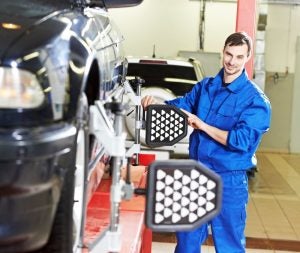
A wheel alignment being performed near Anderson, IN

The Importance of Regular Wheel Alignment Checks for Your Chevy

A wheel alignment involves making precise mechanical adjustments to your Chevy's suspension system to position the wheels correctly. When your wheels are accurately aligned at your Chevy dealer, your wheels will be centered, and your tires will make proper contact with the road, ensuring optimal vehicle performance, comfort, safety, and fuel efficiency. more Handling The correct alignment of your wheels ensures that your tires wear evenly and that your Chevy's weight is equally distributed across all four tires. This will give your tires traction and significantly improve your vehicle's handling, particularly when navigating curves or making more rapid turns. Control When your Chevy's wheels are correctly aligned, your vehicle will respond accurately to steering inputs, allowing you to maintain complete control. Proper alignment will also prevent your car from drifting, especially when driving at high speeds or in inclement weather. Comfort Misaligned wheels can cause steering wheel vibrations, making driving your vehicle far less enjoyable. However, when your Chevy's wheels are correctly aligned, uncomfortable vibrations are reduced, making your driving experience much smoother. Safety Proper alignment enhances your safety on the road by minimizing the risk of losing control of your vehicle, especially during sudden maneuvers. Misalignment can significantly impact your vehicle's braking system by causing uneven pressure on the brake pads, resulting in poor braking ability. Fuel Efficiency Misaligned wheels create friction and resistance, causing your engine to exert more effort, directly resulting in higher fuel consumption. The correct alignment of your wheels minimizes rolling resistance, enhancing your vehicle's fuel efficiency and helping you save money on fuel expenses. Tire Life Improperly aligned wheels lead to uneven tire wear, which can significantly shorten the life of your tires. When the suspension is misaligned, your vehicle's tires will make irregular contact with the road, increasing resistance between the tire and the road surface. This causes certain areas of the tires to wear down more quickly than others, resulting in earlier tire replacement. Correct alignment helps distribute the vehicle's weight evenly over the tires, ensuring uniform wear, reducing wear, and prolonging the life of your tires. Repair Costs Proper alignment not only saves you money on tires, it also minimizes mechanical problems by reducing the strain on suspension and steering components that can cause premature wear. Having your Chevrolet technician regularly check your Chevy's alignment will help you avoid unexpected and costly repairs. Maintaining the correct alignment optimizes your driving experience by improving handling, control, and comfort and your Chevy's overall performance. It's also vital for preventing unnecessary wear on your steering, suspension, and tires. Stop at Ed Martin Chevrolet in Anderson, IN, today for an alignment. Our certified and experienced Chevrolet technicians use cutting-edge technology and equipment to ensure you reap all the benefits of proper alignment.

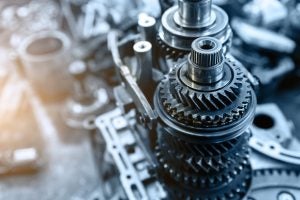
A car's transmission being worked on at a service center near Indianapolis, IN

Chevy Transmission Care: Ensuring Smooth Gear Shifts

​​​​​​​​​​​​​​​​​​​​Your Chevy transmission takes the energy produced by the engine and uses a series of gears to channel this energy to the wheels to enable them to move your car at the desired speed. The transmission is a very complex piece of engineering, and it requires regular services to allow it to always work at its best. These are a few signs that you need to visit your friendly Chevy dealer for a transmission service. more Strange Noises A healthy transmission doesn't make any loud sound as it shifts gears, so if you hear sounds from the transmission, the noises are a warning that something is wrong. The most common sound is a slight buzzing noise that will gradually grow louder until it becomes noticeable. You might also hear odd humming or whining sounds. Odd sounds could be due to worn or damaged components, or the transmission might lack transmission fluid. We'll need to examine your transmission to identify the cause of the noises. Fortunately, if you visit us as soon as you hear any sounds from the transmission, we can usually quickly and inexpensively repair their cause. Leaking Fluid A pool of bright or dark red liquid under your Chevy is a sure sign of a transmission fluid leak. This fluid provides the hydraulic power that allows the gears to move. It also provides friction resistance to numerous transmission components, which reduces potential damage. In addition, the fluid helps to cool the components and prevent the transmission from overheating. We don't advise driving if your transmission is leaking, as this could cause serious and irreparable damage to its components. Our technicians will search for the cause of the leak, and one of the most common leak sites is a worn transmission pan gasket. Once we've identified the site of the leak, we'll fix it and then replace the lost fluid. Transmission Slipping Slipping is a disturbing situation where your transmission will shift into another gear without warning. You'll probably hear a variety of metal-on-metal noises and also experience a reduction in power as the new gear engages. In most cases, the gears will change to the previous gear setting, and this can lead to an accident, for example, if the gears shift to Park. This problem could be due to worn or damaged gear teeth, a lack of transmission fluid, or even an error in the transmission computer. We'll investigate and repair the issue. We'll also examine your transmission for any damage caused by the slipping, so we can repair or replace damaged parts and ensure your transmission is in perfect condition. If your transmission isn't working as it should, contact us ASAP at Ed Martin Chevrolet in Anderson, IN.