




Blog / Anderson Chevrolet Service

Blog

All Anderson Chevrolet Service Anderson Chevrolet Dealer Ed Martin Chevrolet Around Anderson Ed Martin Chevrolet Service 2024 Chevrolet Models Safety Features Ed Martin Chevrolet Finance 2025 Model Year Anderson Used Cars Engine Maintenance 2023 Chevrolet Models 2026 Chevrolet Models Maintenance Chevrolet Chevrolet SUV's Chevrolet Tahoe Chevrolet Traverse Chevy Silverado 1500 Auto Repair Chevrolet Colorado Finance Department Brakes Chevrolet Equinox Chevrolet Malibu Chevrolet Trax Chevy Bolt EV Electric Vehicle Oil Change Tire Alignment 2023 Lineup 2026 Chevrolet Silverado 1500 Air Conditioning Chevrolet Blazer Chevrolet EV Chevrolet Suburban Electrical System Financing Your Next Vehicle Headlights 2025 Chevrolet Models Car Warranty Chevrolet Blazer EV Chevrolet Equinox EV Chevrolet Silverado 2500 HD Chevrolet Trailblazer Chevy Corvette Z06 Chevy service Chevy Silverado 2500 Chevy Silverado EV Chevy Trucks Silverado 1500 2026 Chevrolet Bolt 2027 Chevrolet Bolt Chevrolet Camaro Chevrolet Corvette Chevrolet service and parts Chevy Silverado 3500 HD Custom Order Ignition Coils Interior Sedan Sports Car Transmission
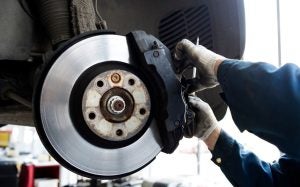
A person repairing a Chevy's brakes near Anderson, Indianapolis

How Often Should You Change Your Chevy's Brake Pads?

Poorly maintained brakes can lengthen the distance your vehicle takes to stop or, in rare cases, fail completely. Unfortunately, you may not notice your braking system starting to deteriorate. Scheduling regular maintenance with your Chevy dealer ensures the safe operation of all your vehicle's components, including its brake pads. Between service appointments, be mindful of the following guidelines, and don't ignore any potential safety issues. more Number of Miles on the Vehicle Pads may last 35,000 miles on the low end or up to 80,000 miles on the high end. Driving more kilometers might mean changing your vehicle's pads more often, but not always. Driving habits and conditions also affect the lifespan of your car's braking system. If you usually drive in an urban area with stop-and-go traffic, you'll be engaging your brakes, and wearing down the pads, more often. In contrast, highway driving with light traffic typically requires you to use your brakes less often, so your vehicle's brakes may last longer. Number of Inches on the Pads You can visually inspect your car's pads and measure the friction material remaining on them. If the friction lining has less than 0.25 inches, book an appointment with your dealership. A service technician is better qualified to look for other signs of wear and tear, and they can advise you whether it's time to replace them. Lining less than 0.10 inches thick requires immediate attention. Number of Months Since a Chevy Dealer Inspected the Pads Preventative maintenance is an easy solution to avoid an unexpected mishap. Ask your service technician to inspect the pads when rotating the tires or changing the oil. Noticing unusual noises or problems with your vehicle's operation between scheduled service appointments is also a reason to contact your dealership. Pads that are failing may make a squealing or grinding sound, which indicates the pads have worn so thin that they're scraping against the brake rotors. Feeling your vehicle pull to one side when you brake may mean the pads are coated with grease, dirt, or dust. Routine brake cleaning may prevent this problem, so ask your dealership if it's the right choice for your vehicle. Your pads create friction that slows or stops your vehicle, making them essential to your car's safe and proper functioning. However, the friction causes them to become thinner and less effective over time. Ignoring your vehicle's pads can compromise your safety on the road and the safety of others. Schedule a service appointment at Ed Martin Chevrolet today, and be confident that your vehicle will be road ready for your daily commute and weekend adventures.

Red 2023 Chevrolet Trailblazer driving down a street near Anderson, Indiana

At a Glance: The 2023 Chevy Trailblazer

The Chevy Trailblazer has returned with a 2023 model that is sure to excite SUV enthusiasts. This vehicle offers four trim levels and a range of add-ons to improve your driving experience. In this guide, we'll explore the key highlights of this subcompact SUV. more Basics About the Chevy Trailblazer The 2023 Trailblazer is available with front-wheel drive or all-wheel drive, and it can tow up to 1,000 pounds. Most of its similarly-sized rivals have no towing capacity at all. It comes with a choice of two engines. A 1.2-liter three-cylinder delivering 137 horsepower comes as standard. Motorists looking for some extra acceleration have the option to upgrade to a 1.3-liter engine delivering 155 horsepower in the vehicle's Activ and RS trims. New/Unique Features There are no major changes from the 2022 model, although there are new coats available in 2023. These include fountain blue, sterling gray metallic, and nitro yellow metallic. The 2023 Trailblazer comes with the Chevy Safety Assist package as standard in all trim levels. This package includes front collision alert, automatic emergency braking, following distance indicator, lane keep assist with lane departure warning, and Intellibeam high beam assist. For extra safety, you can purchase the optional Driver Confidence package, which includes lane change alert, rear cross-traffic alert, blind spot monitoring, and cruise control. Plenty of Cargo Space The Trailblazer's high roof will ensure even the tallest of passengers will feel comfortable. If you choose to fold down the front passenger seats, you'll be able to carry items up to 8.5 feet long. That's surprisingly spacious for a vehicle technically considered a small SUV. Suitable for Off-Road Enthusiasts Upgrade to the Activ trim, and you'll benefit from sport terrain tires, a front skid plate, and a suspension suitable for off-road driving. With the all-wheel drive function in action, you'll be ready for the most challenging off-road adventures. Customize to Your Heart's Content As well as the Driver Confidence package mentioned previously, there is a range of other optional features to add. The Technology Package includes a premium 7-speaker Bose sound system, adaptive cruise control, an HD rear vision camera, and a larger infotainment system. The Convenience Package includes an auto-dimming rearview mirror, automatic climate control, and more. The Sun & Liftgate package grants you a hands-free liftgate and sunroof. To learn more about the Trailblazer or any Chevy vehicle, pay us a visit at Ed Martin Chevy. Our experts will be thrilled to answer your questions and show you our range of new and used vehicles.

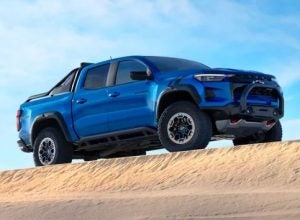
2023 Chevrolet Colorado driving on sand near Anderson, Indiana

A First Look at the Next-Gen 2023 Chevy Colorado

If you are looking for an excellent mid-size truck this year, you need to check out the 2023 Chevy Colorado. This truck has been completely redesigned to be bigger and better than its predecessor, with a larger wheelbase and broader body. In addition, the upscaled design of the '23 Colorado is available in rear and four-wheel drive options. Read on to learn more about the incredible features of the Colorado. more Every trim level of the '23 Colorado has plenty of passenger space in its four-door crew cab. The front seats are comfortable and have plenty of support for the driver, while the back seat has excellent legroom and can fit your tallest family member. The new center console of this mid-size truck is the perfect space to rest your arm while you drive and has excellent storage space for your keys, phone, wallet, and other small items. The cabin of the '23 Colorado is open and airy when you choose the available sunroof. The sunroof provides fresh air to passengers while you drive, warm sunshine, and an epic view of the stars at night. This is the first time a sunroof has been an option for the Colorado. Performance When you purchase a '23 Colorado, you get a turbocharged 2.7L inline-four engine under its hood. Your power output is going to change depending on the model you choose. Your base model, the WT, and the LT get a respectable 237 horsepower paired with 259lb-ft of max torque. When you jump up to the Z71 or Boss Trail models, you can expect to get 301 horsepower and 390 lb-ft of max torque. If you are looking for the most power available on the '23 Colorado, you want to choose the '23 Colorado ZR2. The trail-ready ZR2 model generates a massive 310 horses with 430 pounds per foot of maximum torque. Every model of the Colorado has excellent acceleration and a responsive throttle that make them a blast to drive. Infotainment and Connectivity The '23 Colorado has a massive 11.3-inch touchscreen that runs the latest Chevy infotainment software. You can choose to accept the Chevy subscription service with your truck, at which point it will come equipped with the available built-in Google Assistant. Your Google Assistant can accept voice commands in order to make phone calls, play your favorite music, and even search for destinations with your navigation system. The '23 Colorado by Chevy is a fantastic mid-size truck perfect for running around in the hills for weekend fun and dashing through town on errands during the week. Come visit us at Ed Martin Chevrolet and check out our new and used inventory, including our electric vehicles, today.

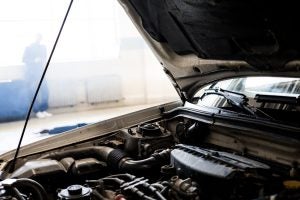
Person having an engine problem with their Chevrolet near Anderson, IN

3 Engine Problems You Should Always Fix at Your Chevy Dealer

The engine is the most vital part of your Chevy as it produces the power that enables your car to move. An engine is a very complex piece of engineering and is filled with a huge variety of components. The interconnected nature of an engine means that a problem with one component will cause trouble for the engine itself. As your Chevy dealer, we'd like you to know signs that you may have engine problems we need to repair. more Worn Spark Plugs The spark plugs provide the ignition source for the fuel-air mix in the cylinders. Fuel and air must mix in a precise ratio in the intake manifold, and the resulting mixture is drawn into the cylinders. Once inside the cylinders, the mixture is compressed and then ignited. If your spark plugs are worn or damaged, combustion may become problematic. A problem with igniting the cylinder contents will cause misfiring or even stalling. Spark plugs eventually wear out, and they can be damaged by other problems in your engine. A high ratio of fuel to air, for example, will coat the plugs in carbon. This carbon coating makes ignition more difficult and will degrade the plugs. Our technicians will clean or replace the plugs to fix this issue. Clogged Radiator If your engine temperature is climbing for no apparent reason, you have a cooling system problem. The radiator is the center of the cooling system, and its job is to remove heat from your engine. Coolant circulates through your engine and absorbs the heat, which it carries to the radiator for removal. The coolant also carries dirt, rust particles, and other debris to the radiator. The debris trapped in the coolant is deposited in the radiator when the coolant is recirculated through the cooling system. This debris will slowly build up and block the radiator tubes and hoses. A blockage in the radiator will prevent heat from being removed from the coolant, and your engine temperature will increase. We can fix this problem by removing your radiator and flushing it to clear any blockages before we reinstall it. Strange Engine Noises Your Chevy's engine operates very efficiently and almost silently. If you hear screeching, banging, knocking, or any other strange noises, your engine needs to be checked. These sounds could mean a simple problem like an alternator belt that needs tightening. Noises from the engine could also mean a more serious problem is starting. If you hear any noises, it's important to contact us right away so our expert technicians can investigate. We'll identify the problem and fix it for you. If your engine shows any sign of trouble, call us ASAP at Ed Martin Chevrolet.

3 Tips for Replacing Your Chevy Parts

3 Tips for Replacing Your Chevy Parts

If you're a proud owner of a Chevrolet vehicle, you already know the amazing ride quality and durability your car or trucks provide you with. But like all great vehicles, there are instances where Chevy parts need to be replaced, and this is where car owners like yourself have a responsibility to give your investment the TLC it deserves. Here are some important tips when it comes to changing parts on your Chevrolet. Leave It to the Pros When it comes to changing your Chevrolet parts, no one is better suited for the job than Chevy's factory-trained technicians. Your authorized Chevrolet service center also has the tools and technology needed to ensure your vehicle is up to speed on all fronts. While you may know your way around a car engine, it's best to trust an expert who is trained to know everything about your vehicle. They'll make sure parts are installed correctly and up to the manufacturer's specs. more Don't Settle for Aftermarket Parts Unfortunately, while aftermarket parts could save you a couple of bucks, the risks they pose if things go wrong can wind up costing you much more than that. Without Chevy's strict testing and certification protocols, there are no guarantees that your aftermarket part will hold its own and no accountability when they break. OEM parts are built and certified by Chevy with warranties to back them up. Your Chevrolet vehicle is an important investment, so treat it like one with OEM parts. Purchase Parts From an Authorized Chevy Dealer Although getting the best deal is never a bad thing, sometimes it just so happens that you get what you pay for. Many online car parts websites have popped up in recent years, and so have issues with defective parts. Your authorized Chevy dealer will not only get you 100% OEM parts, but they'll also source the best price for you. If you find that exact same item cheaper somewhere else, your Chevy dealer will match that price. What to Do if a Dashboard Light Turns On Your dashboard has a variety of light signals that advise you if there is a problem with your vehicle. In many cases, a warning light switching on is an indication that a part may not be functioning properly. For example, if the Chevy Malfunction Indicator light turns on, there is a good chance one of your engine parts is not working the way it is supposed to. In this case, we recommend visiting an authorized Chevy dealer and allow one of their trained experts to analyze your vehicle. Thanks to the early bird service hours at your local Chevrolet dealership, you can get your car in for service before your start your day to have your new parts installed. If weekdays aren't an option, Chevy offers valued customers Saturday service, so that they can get the OEM parts they need without having to miss a workday. Visit us today to preview our great selection of new and pre-owned Chevy vehicles. Image courtesy of pexels.com

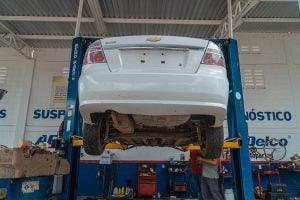
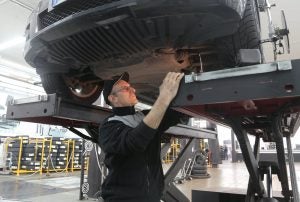
Chevy getting repaired in a shop near Anderson, IN

Does Your Chevy Need a New Catalytic Converter?

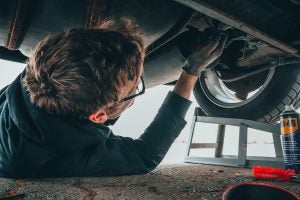
Your catalytic converter works under conditions of great heat and pressure. These factors, together with age, will take their toll on the converter. As your local Chevy dealer, we'd like you to know some signs we need to repair or replace your converter. more Your Engine Dies After It Starts One of the signs of a failed converter is your engine fails within seconds of starting. This problem can sometimes be mistaken for an electrical issue. The cause of the problem is a blocked converter. The converter changes dangerous chemicals into less harmful ones. One of the byproducts of your engine and this process is carbon. Carbon can slowly build up, solidify, and block the exit of the converter. When your engine starts, the combustion process begins. The combustion residue is dumped into the converter, and combustion continues. If the converter is blocked, the converted gases are forced into your engine. The arrival of these gases creates back pressure in your engine, which shuts down in response. Our technicians can remove the blockage to fix this problem. Your Converter Looks Blue If you slide underneath your car, you'll see the bulbous converter attached to the exhaust system. The converter usually also stands out as it looks shinier than the rest of the system. If you see a blue tinge on the converter, it's a sign the converter is failing. This failure is caused by excessive heat inside the converter, which causes it to burn out. Excessive heat can be caused by several factors, including a failed oxygen sensor or a fuel-rich engine. A fuel-rich engine has a higher percentage of fuel than air. This situation can result in poor combustion, where much of the fuel in the cylinders doesn't burn. This hot fuel is ejected into the converter and raises its internal temperature. We can't fix a burnt converter, but we can replace it to fix the problem. Your Converter Is Rattling Rattling noises from the converter could be a sign that one of the brackets securing the converter to the underside of your car has loosened. These noises could also mean that the interior of the converter is crumbling. The inside of a converter resembles a honeycomb and provides a large area for the efficient conversion of toxic gases. Your converter can be damaged in various ways, including the above example. Hot fuel residue can crack some of the honeycomb structure. These cracks will expand, and pieces will break off. This weakens the honeycomb and contributes to further damage. We can't repair the damage to the honeycomb, but we can fit a new converter. If your converter is failing, call us right away at Ed Martin Chevrolet. Image courtesy of Midia via Pexels

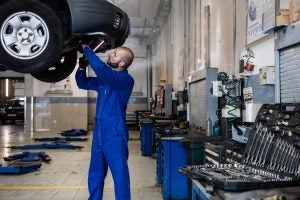
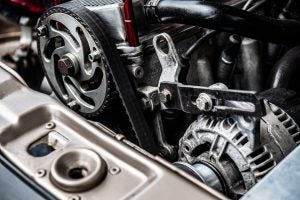
Mechanic working on servicing a car near Anderson, IN

6 Keys to Proper Chevy Maintenance

If you're proud to own a Chevrolet, then you most likely spend time and effort keeping your beloved Chevy in the best condition possible. That time and effort you spend should include scheduling regular appointments at your local Chevy dealer. By keeping your Chevy properly serviced, you will keep it running smoothly for years to come. Neglecting those essential services can be very dangerous and could even cause your car or truck to break down completely. Here are six keys to proper Chevy maintenance. more 1. Brakes Keep your stopping power precise by getting your braking system tested regularly and well-maintained. Whether it's your pads, calipers, or rotors, malfunctioning brakes put you at serious risk when you're driving. By going to a Chevy dealer, you can have your Chevy's brakes evaluated and serviced regularly, keeping your car or truck in excellent condition. 2. Battery Have you ever tried to start your car on a frosty morning, and nothing happens? Having a dead battery is a huge inconvenience, and if you're left out in the cold, it can be downright dangerous. Head to your Chevy dealer so you can have your battery inspected and tested for proper function. If you need a new battery, they have a wide range of options to choose from that will have your Chevy running smoothly again in no time. 3. Tires Far too many owners neglect their tires when it comes to keeping up with the proper Chevy maintenance. It may not seem like it, but keeping your tires inflated to the right pressure is actually very important. Rubber ages and deteriorates over time, and keeping your tires inflated to the correct pressure extends their lifespan, making them last longer. It also contributes to a better functioning tire and even helps you get better gas mileage. 4. Oil Changes It's recommended to get your vehicle's oil changed every 3,000 miles, but newer Chevy's are designed with their exclusive Oil Life Monitoring System, so they have much longer intervals. Check your owner's manual to see what your specific vehicle requires. However, even with more extended periods, it's still vital to get your oil changed as soon as it's needed. This allows much better engine function and will increase the life of your car. 5. Electric If you own an electric Chevy or one with a hybrid drivetrain, it's essential to head down to your Chevy dealer to get your battery inspected. The Chevy-Certified mechanics there can evaluate your battery and inform you if it needs any service. They will run your vehicle through a multi-point checklist to ensure that every component of its electric system is functioning correctly. 6. Engine and Transmission The engine and transmission are the heart and soul of your beloved Chevrolet and therefore require special service and care. You can put your car at risk of malfunctioning and a potential breakdown by neglecting these critical systems. Every Chevy dealer has the expert mechanics, knowledge, and state-of-the-art equipment needed to service your vehicle's engine and transmission properly. Whether you need parts, service, or just a flush, they have the know-how to get it done quickly and correctly. Owning a Chevy means being proud to drive every time you slide behind the wheel. However, when you neglect the basic maintenance required, your vehicle can fall into disrepair or even become dangerous to drive. Getting your vehicle regularly serviced at a Chevy dealership and ensuring all your major systems are functioning right keeps your car in excellent condition and makes it last longer, too. Head down to Ed Martin Chevrolet today and give your Chevy the expert upkeep and care it deserves. Image courtesy of Andrea Piacquadio via Pexels

Time for a Radiator Repair? 3 Signs of a Damaged Radiator

Time for a Radiator Repair? 3 Signs of a Damaged Radiator

Your Chevy's radiator is essential for controlling your engine temperature. A car's engine is a very hot place due to the heat generated by combustion and the constant movement of thousands of parts. Without an effective cooling system, your car's engine can easily overheat and suffer serious damage. A radiator, like any other component, can get damaged. As your Chevy dealer, we're here to help you when you need a radiator repair. more Jammed Thermostat When your engine temperature rises over 180F, liquid coolant is released into your engine to lower the temperature. This coolant is a mix of antifreeze and water, and it can absorb heat as it travels through your engine. The hot coolant is pumped into your car's radiator, where it's cooled by air flowing in through the radiator grille. The coolant is then recirculated through your engine again until the temperature drops. The release of coolant is governed by a small component called the thermostat. This small valve opens when the engine temperature reaches a pre-set point, which is usually between 180F and 200F. If your thermostat fails, it will jam in either an open or closed position. If the thermostat jams closed, it won't release any coolant and your engine temperature will rapidly rise. Damaged Radiator Fins When the hot coolant flows into your radiator, it's diverted into parallel rows of thin aluminum tubes that look like fins. Cool air blowing in through the radiator as your car moves blows across these tubes to remove the heat from the coolant. These fins create a larger surface area and allow for faster and more efficient cooling of the liquid. The fins are made from aluminum which allows for faster cooling than steel, but it also makes them susceptible to damage. Grit, sand, and any small debris from the surface can easily bend or damage them. If enough of the tubes are damaged, this can block the radiator and prevent the hot coolant from being cooled. Your engine temperature will start to rise. If the fins are damaged, we would need to replace your radiator. Engine Temperature Rises It's not unusual for your engine temperature to temporarily rise due to hot weather or if your car is pulling a heavy load. Under normal circumstances, your car's cooling system will quickly reduce the temperature. If your engine temperature continues to climb, this is a sign that there's a problem with your cooling system. Some of the causes of a cooling system problem are a lack of coolant due to a leak, damaged radiator fins, or even a damaged thermostat. A rising temperature can easily lead to an overheated engine. To prevent this, it's advisable to pull over as soon as it's safe to do so and then call our service department. Our technicians will examine the system and find the cause of the problem. If your radiator doesn't seem to be working correctly, call us immediately at Ed Martin Chevrolet. image courtesy of pexels.com

What to Do When Your Chevy Needs an Alternator Repair

What to Do When Your Chevy Needs an Alternator Repair

The alternator is often a very misunderstood component. The battery gets most of the credit for providing your car's electricity, but the battery depends on being recharged by the alternator. If your alternator fails, your battery will fail soon afterward. When your alternator is showing signs of failure you'll need an alternator repair. Your Chevy dealer in Anderson, IN, can help you. more Battery Warning Light The warning lights on your dash are connected to sensors placed throughout your car. Each sensor is connected to one of your car's important components, and the sensors watch for any sign of trouble. If one of the components malfunctions, the sensor will relay the information to your car's computer, and the warning light will come on. As your alternator ages, its voltage decreases. If the sensor attached to the alternator detects a fluctuation in the voltage, this causes the light to come on. The warning light can also signal a problem with your battery. As a battery gets older, it has problems in holding an electrical charge, and the electricity it provides reduces. Either of these issues can cause the warning light to come on. Weird Noises No driver likes hearing strange sounds from their car. Any odd noise suggests a potential problem. Whining or rattling noises can be caused by several different issues. If you're also having electrical issues, the alternator could be the most likely cause of these noises. Your alternator is driven by the alternator belt, and this belt is powered by the turning of the crankshaft as your car moves. The alternator pulley is driven by the alternator belt. The alternator pulley sits on a set of bearing and bushings which allow it to move. A cracked bushing or a worn bearing will cause whining noises as the pulley spins. A rattling sound is very unusual but also very serious. If a damaged alternator is not replaced, it will place additional strain on your engine. This additional strain can lead to damage to your engine bearings, and these damaged bearings will make a rattling noise. Difficulty Starting When you turn the key or press the start button, your battery sends a strong electrical charge to the starter solenoid. This tiny component causes your engine to crank. Normally, your engine will start almost instantly. If your engine takes longer to crank, there could be a problem with the alternator. While the battery provides the charge to start your car, your alternator is responsible for recharging your battery. A weak alternator won't be able to fully recharge your battery. This means that each time your battery is used, it will get progressively weaker. The delay in starting is due to your battery needing to build up enough charge to start your engine. If you experience any of the signs above, or you're concerned your alternator may not be working correctly, call us right away at Ed Martin Chevy. We'll fix it for you. image courtesy of pexels.com

4 Signs Your Chevy May Be in Need of a Brake Repair

4 Signs Your Chevy May Be in Need of a Brake Repair

When it comes to safe driving, your car's brakes are paramount. Fortunately, braking mechanisms rarely fail without a gradual decline with clear signs of wear and tear that give you plenty of time to notice and fix any problems. If you detect one of the following four common signs of brake trouble in your Chevy, head down to your local Chevy dealer for brake repair pronto. 4 Signs Your Chevy May Be in Need of a Brake Repair more You Experience Brake Fade If your car's taking longer to stop when you press the pedal, you're most likely experiencing brake fade. This is where your brake pads and rotors are no longer generating enough friction to stop the wheels effectively. You might find you have to press the pedal harder and for longer than usual. It's a very disconcerting sensation. Brake fade occurs when your braking components overheat, perhaps from too much prolonged braking, such as long periods in stop-and-go traffic or downhill driving. If you experience brake fade, pull over and let your braking system cool down for an hour or so. The problem should then go away, but if it doesn't, take your car in for a check-up. Your Brake Pedal Shudders When your rotors and brake pads overheat, it can cause resin in brake pads to melt. If this melted resin then spreads and hardens on the rotor unevenly, they call this called glazing. The lumpiness of the new rotor surface might cause your brake pedal to vibrate under your foot. This is a serious issue and your damaged rotor will need an immediate fix. You Hear Screeching If you begin to hear screeching or squealing from below you, this might be because your brake pads have worn down too much. Break pads are made from a combination of metal elements bound together by resin to make an ideal substance for creating friction. This resin-bound surface layer sits upon a steel bed. Eventually, the surface layer of brake pads wears down from all the braking. When it's gone, you're left with steel scraping on steel, which creates a screeching sound. In fact, it's often designed to make a lot of noise to draw your attention. So if you hear screeching, it's time for replacements. You Hear Clicking When applying or releasing your brakes, if you hear an odd clicking sound, it might be a sign of loose components somewhere in your braking mechanism. Certain jolts or damage over time can loosen bolts, pins, or clips inside the caliper. The result is often an odd clicking sound whenever you use your brakes. A technician will be able to sort it out for you. How a Chevy Dealer Can Help A good mechanic at your local dealer will check your brake fluid levels and all the under-hood lines for loose connections. They'll raise the car and take off the wheels to check your under-car brake lines and hoses, your brake pads, and your rotors for grooves, cracks, or glazing. They'll show you all that they find, explain the exact condition of your braking system, and fix or replace whatever requires it. If you'd like your brakes checked by certified professionals, visit Ed Martin Chevy, part of the Ed Martin Automotive Group, a trusted provider of automotive vehicles, servicing, and financing since 1955. image courtesy of pexels.com

Transmission Problems? Visit Your Anderson Chevy Dealer Today

Transmission Problems? Visit Your Anderson Chevy Dealer Today

Your transmission is one of the hardest working parts in your car, and it suffers more wear and tear than any other mechanical system in your vehicle. A transmission is filled with hundreds of moving parts, many of which depend on friction to work. Due to these conditions, regular service is vital to keep your transmission in good working order. If your car experiences transmission problems in Anderson, IN, we can help you. Transmission Problems? Visit Your Anderson, IN Chevy Dealer Today more Strange Noises Strange sounds from your car can make any driver jittery. If you don't know the cause of the problem, or even where the problem is, the general assumption is that something terrible is happening. Not every noise means that a costly repair is on the horizon, but they do mean that something is not right. Our expert technicians will investigate and find the cause of the problem. The issue may be as simple as replacing your transmission fluid. Leaking Fluid Transmission fluid is bright red, and over time it darkens due to contaminants. If you spot a pool of red liquid underneath your car, you have a transmission leak that needs to be fixed. If the liquid is brown or black, this is also a sign that your transmission fluid needs to be replaced and the transmission flushed to remove any leftover contaminants. Smell of Burning Transmission fluid helps to reduce friction between the numerous components and to reduce the temperature in the transmission. The fluid collects small particles of debris, rust, and small metallic particles in the transmission as it circulates, and this debris contaminates the fluid. Contaminated transmission fluid loses its heat-reducing capabilities, and also becomes susceptible to burning. If you smell the odor of burning rubber, it can be a sign your transmission fluid needs to be changed. Poor Response A hesitation in shifting gears, or worse a refusal to shift gears are signs of a transmission problem. A manual transmission may show a disconnect between your car's speed and the engine RPM's, as the RPM's are much higher than they should be for the speed you're traveling. An automatic transmission will show a delay between shifting from drive to park. Check Engine Light The check engine light covers a wide variety of possible issues. The light is connected to sensors attached to crucial components in your car. When all the components are functioning correctly, the engine light stays dark. If a problem is detected, the sensor attached to the component will transmit a signal to the engine light which will then light up. This light doesn't necessarily mean there is a transmission problem, but there is a problem that needs to be investigated. Early detection of a transmission problem can prevent a minor problem from becoming a major one, and prevent repair costs from rising. If you experience a  problem with your transmission, call our service experts immediately at Ed Martin Chevy and we'll fix it for you. image courtesy of pexels.com

How Long Has It Been Since Your Last Car Safety Inspection?

How Long Has It Been Since Your Last Car Safety Inspection?

Car safety inspections are easy to forget about. However, there are many benefits to getting it done. They can save you money, keep your vehicle in good shape for years to come, and of course, keep you safe out on the road. Read on to see why you should go get your car inspected in Anderson IN today. How Long Has It Been Since Your Last Car Safety Inspection? more Risk of Citation Getting pulled over can be a hassle, especially when it ends with getting a ticket. It can be easy to overlook small things, like a turn signal or a brake light being out. Those small things, however, can lead to a citation every time you get stopped for it. Luckily, citations are easily avoidable. With a safety inspection from your local car dealer, you can drive comfortably knowing everything is in order. Most dealers do a range of maintenance from headlight repair to suspension work. It's best to trust a professional when it comes to the safety and condition of your car. Tire Wear and Tear Tire issues have made many heads go gray. Being stranded on the side of the highway with a flat tire and no help is no fun. Getting your tires checked out is another great reason to go get a safety inspection. It could save you the pain of a flat, and will also keep your car's traction solid. It can be hard to spot tire issues with an untrained eye. A tire could be bulging slightly, leaking slowly, or altogether rotten. These issues are hard to spot at first but slowly build over time. If left unchecked a bad tire can wreak havoc on your vehicle's undercarriage systems. Money Engine troubles, like tire troubles, are another pain but they can be avoidable. Most engine troubles are caused by the exasperation of a problem long undiagnosed. The engine may not be getting proper air intake, it may not be cooling correctly, or the oil filter may be dirty. Those are just three of many problems that could be happening under the hood. Getting an inspection is a perfect way to catch problems early. Usually, these problems are simple, quick, and easy fixes. Without an inspection, those problems may turn into complicated, long, and expensive fixes. So it's always best to play it safe and get a routine checkup, much like going to the dentist or the doctor. Visit a Dealer in Anderson, IN Whatever vehicle you may drive, it is a great idea to get your vehicle inspected at a dealer. For example, taking your Chevy to a Chevy dealer will guarantee expert service. Chevy mechanics are well versed in all types of Chevys and have seen it all. So whether it's a routine checkup or something doesn't sound right, trust a dealer with your car. Another benefit of going to a dealer is the use of manufacturer-issued parts. Sometimes third-party auto shops may use third-party parts not specifically made for your vehicle. Manufacturer-issued parts are more reliable, and usually last much longer than the aftermarket parts. Nobody likes car issues, but these problems are usually preventable. Getting out in front of the issue by getting your car inspected is the second step to a long and healthy car life. The first step is finding a dealer who is both knowledgeable and professional in their automotive approach. Give Ed Martin Chevrolet a call today to schedule a routine car inspection. image courtery of pexels.com

Contact Us

Fill out this form below and we'll contact you shortly
*Required Fields